
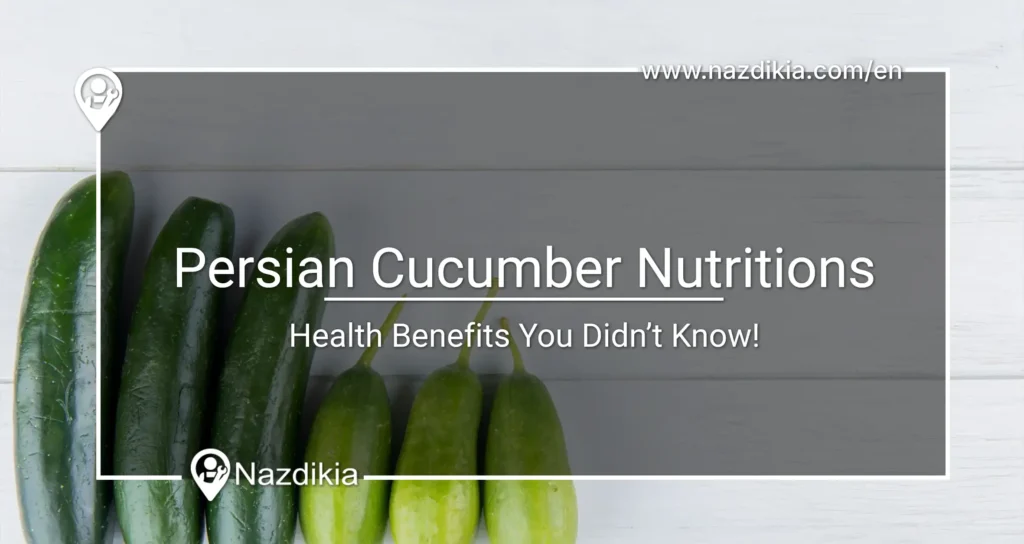
Whether it’s a formal party or an intimate gathering of friends, your Persian host makes sure that the Persian cucumber fills half of the fruit bowl. There are people who don’t like peaches or aren’t a huge fan of apples, but no one says no to shiny, fresh, crisp Persian cucumbers. And, one is never enough! You need to have at least two cucumbers to satiate your craving. It’s not just the taste of Persian cucumbers that makes them irresistible; there are many health benefits you get from them as well.
Persian Cucumber Calories
You’re probably reading this because you’re sticking to a careful diet. Well, take a deep breath; this fruit is low in calories and doesn’t interfere with your diet. Persian cucumber consists of 95% water, and there are about 15 calories in each 100 grams. So, enjoy this healthy, fat-free snack without any guilt of gaining weight.
Other Nutrients in Persian Cucumber
Cucumber isn’t all water. There are various macronutrients and micronutrients that bring about health benefits. The table below summarizes these nutrients in 100 grams of Persian cucumber:
| Macronutrients and Calories | |
| Nutrient | Quantity |
| Calories | 15 kcal |
| Carbohydrates | 4 g |
| Dietary fibers | 0.5 – 2 g |
| Sugar | 0 – 2 g |
| Micronutrients | |
| Vitamin C | 2 mg |
| Calcium | 19 – 39 mg |
| Iron | 0.3 – 0.4 mg |
| Potassium | 0 – 75 mg |
Health Benefits of the Persian Cucumber

This watery fruit has several health benefits, ranging from weight management to softer skin. Let’s take a closer look at these benefits.
- Sustained hydration:
The cucumber consists of 95% water, which makes it a must-have snack for the hot seasons; It keeps your body hydrated. Additionally, since the water in a cucumber is bound within plant cells and surrounded by fibre, your digestive system releases the water gradually. This means that consuming the Persian cucumber helps with a slower and more sustained hydration compared to consuming fresh water.
- Improving digestion:
The fibres in the cucumber are mostly insoluble, particularly the fibres in the skin. This means that consuming the cucumber adds bulk to the stool, which, in turn, helps it move through the intestine and ultimately reduces the risk of constipation.
- Skin care:
It’s not just by eating cucumbers that you can benefit from them; you can apply sliced pieces of cucumbers to different parts of your skin, especially your forehead, cheeks, and eyelids. You can apply sliced cucumbers to inflamed or red spots on your skin to help it recover from the damage.
To get the most out of cucumbers in external use, you should chill the washed and sliced cucumbers for 30 – 60 minutes in the fridge. The cold temperature boosts the de-puffing and soothing effect. You should also wash and dry your skin before application. Once applied, wait for 10 – 15 minutes and then throw away the cucumbers.
You don’t need to wash your skin after use unless it’s sticky. It’s good to apply moisturiser after use to lock in the hydration.
- Weight control:
Cucumbers aren’t a weight loss medicine or a fat burner, but they can help you manage your weight. This is because Persian cucumbers have low energy density and high water content. A smart strategy is to eat cucumbers without peeling them 10 or 20 minutes before having lunch or dinner to help you feel full faster.
- Heart health benefits:
The cucumber is listed in an article, Foods Low in Potassium, as a food with a modest amount of 76 mg of potassium or 2% of the daily value. Although insignificant, consistent use of cucumbers can balance sodium in your body and reduce stress on blood vessels. Also, cucumbers’ high water content helps prevent dehydration-related strains on the heart.
- Boost metabolism:
The Persian cucumber contains negligible amounts of vitamin K, vitamin C, potassium, and antioxidants. Consistency in consumption can signify the benefits of these micronutrients and lead to overall metabolic health.
Other Ways of Consuming Persian Cucumbers

The most common way of consuming cucumbers is raw and fresh consumption. But you can get creative and have them in other ways:
- Pickled: dill pickles, sweet pickles, cucumber pickles
- Juiced or blended: cucumber juice, smoothies
- Cooked: lightly stir-fried and used in soups or stews
- Frozen: blend the cucumbers, freeze them in ice cubes and use them as ice in drinks
- Infused water: steep the cucumbers in water with lemon and mint
Persian Cucumber vs English Cucumber

Persian cucumber and English cucumber are inherently the same thing, and the differences are mostly in their physical form. Persian cucumbers are shorter than English cucumbers, and their skin is slightly bumpier than English cucumbers. Also, you’re more likely to see Persian cucumbers served in a fruit bowl compared to the ridiculously long English cucumbers, which can grow to 30 centimetres.
Can I Grow Persian Cucumber at Home?
Persian cucumbers can be planted in different regions, given that they receive at least 6 hours of sunlight per day and the soil temperature is at least 21 degrees. The best time to grow Persian cucumbers is after the last frost. You should water the plant when the top inch of soil dries, and you should keep the soil moist by applying a layer of mulch on top. If these conditions exist in your region, you can buy Persian cucumber seeds and grow your own cucumbers. Here’s a list of where to buy Persian cucumber seeds and fresh cucumbers around the world.
- Persian cucumber in the US
Persian cucumber seeds in Chicago
Persian cucumber seeds in Houston (Texas)
Persian cucumber seeds in Los Angeles
Persian cucumber seeds in Washington
Persian cucumber seeds in New York and New Jersey
Persian cucumber seeds in San Francisco
- Persian cucumber in Canada
Persian cucumber seeds in Toronto
Persian cucumber seeds in Vancouver
- Persian cucumber in Europe
[…] can read more about the health benefits and nutrition of the Persian cucumber […]