
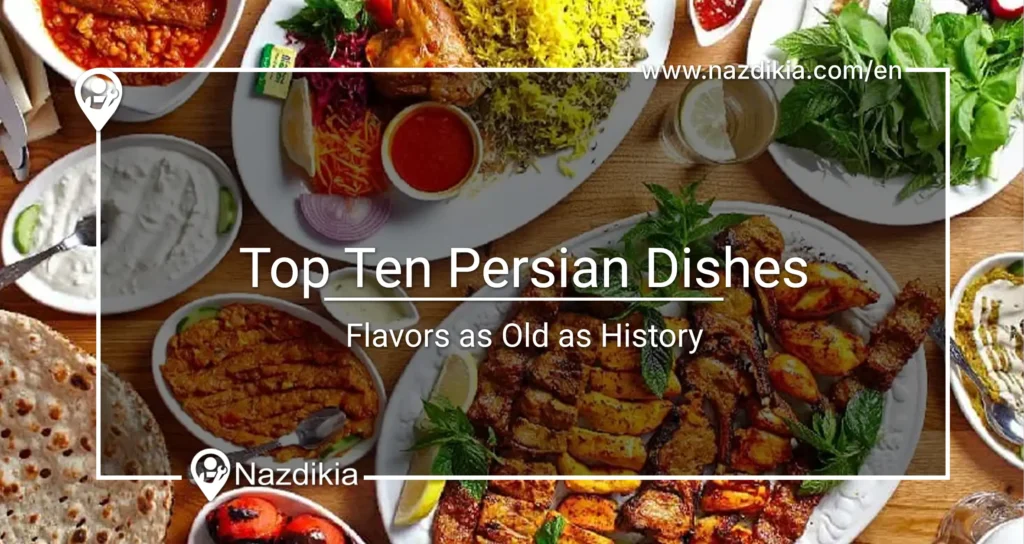
What’s your all-time favorite dish? Well, if you think you know the answer to this question before having tried Persian signature dishes, you should reconsider your answer. Even the aroma of Persian foods is enough to make you doubt whether your favorite food is, in fact, your favorite food. But we’re not just flattering Persian food and cuisine. We want to take you on a journey of unique tastes to make you see for yourself how Persian food can change your idea of what’s delicious and what’s not.
First stop: Chelo Kebab
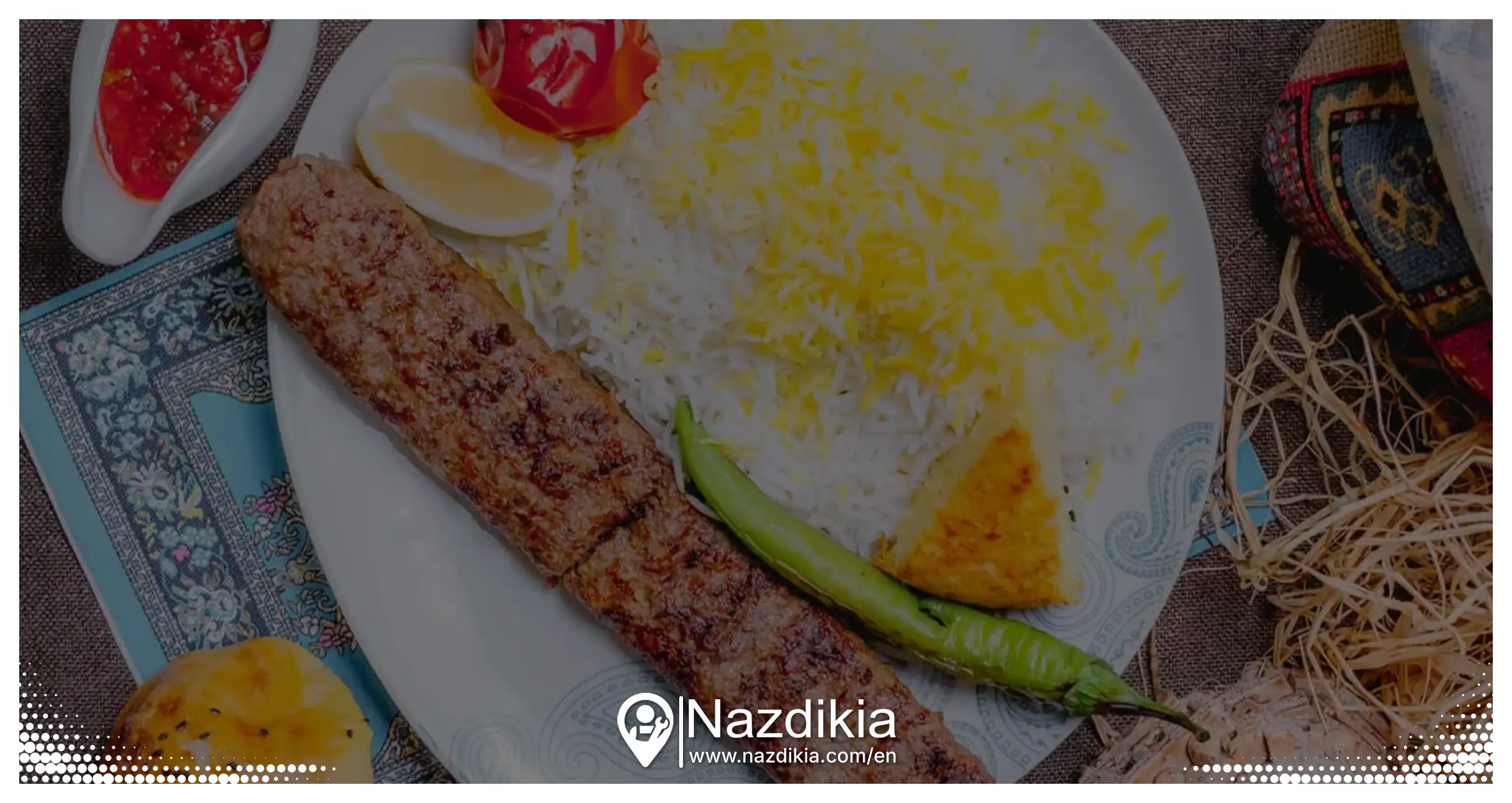
The most iconic dish of Persian cookery is Chelo Kebab. It’s a dish served in both mourning ceremonies and weddings, as well as other important celebrations.
The staple foods in Chelo Kebab are minced lamb mixed with fat and rice. Kebab is barbecued over fire, and rice is steam-cooked separately.
Eating kebab with bread is a more delicious alternative because all you taste is the heartwarming flavor of barbecued lamb, paired with a piece of bread that has been greased with the natural fat dripping from the fresh and hot kebabs. Your mouth must be watering right now if this description of this iconic Persian food has been effective.
On the side of kebabs, either with bread or with rice, a piece of onion and some aromatic herbs, such as coriander, basil, and parsley, is placed to elevate the taste. Some people also sprinkle sumac and thyme powder on the Kebab to give it a mild sour taste and add more scent. Squeezing some drops of sour orange or lime juice onto kebabs is also common.
Related Note:
Persian foods are famous for their food value and variety. In Persian cookery, countless combinations of food are made from a limited number of ingredients. Persian chefs know how to blend different flavors to create an edible masterpiece. One staple they use in over half of Persian dishes is rice. There’s a whole article about these interesting facts about Persian foods. Click to learn more.
Second Stop: Khorsht Sabzi
Khoresh Sabzi or Ghormeh Sabzi is the only Persian food whose leftovers are as delicious as the fresh dish, if not more. Iranians whimsically use the term “ja-oftadeh,” meaning well-done, when they’ve heated the leftovers of Ghorme Sabzi for the second time.
Ghormeh Sabzi is considered the main comfort food among Iranians, and they believe that no one makes a better Ghormeh Sabzi than their mother does.
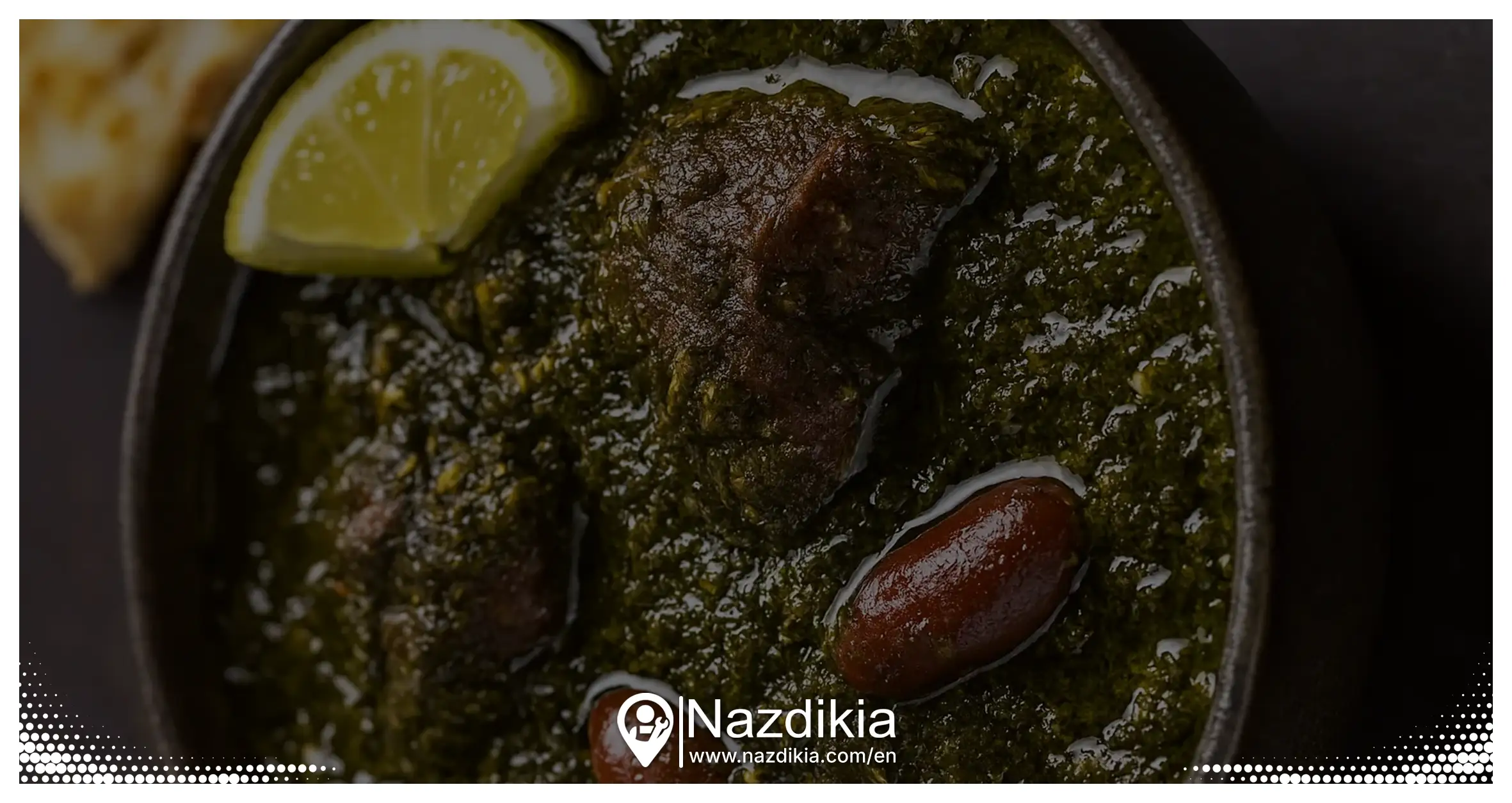
Ghormeh Sabzi is a stew with vegetables such as leek, parsley, cilantro, fenugreek leaves, and, optionally, spinach. Other ingredients of Gormeh Sabzi are pieces of lamb and red kidney beans, as well as spices such as black pepper and turmeric. For a darker color and a more delicious smell, some cooks add dried lime to the mix. When this happens, you can smell the food from the street.
Inside a plate of Ghormeh Sabzi on the table, you can see a dark green color with dark red beans sticking out here and there, not to forget the dark brown of the lamb pieces. In a word, when Ghormeh Sabzi is on the table, you’ll have to be extra careful not to overeat.
Third Stop: Jujeh Kebab
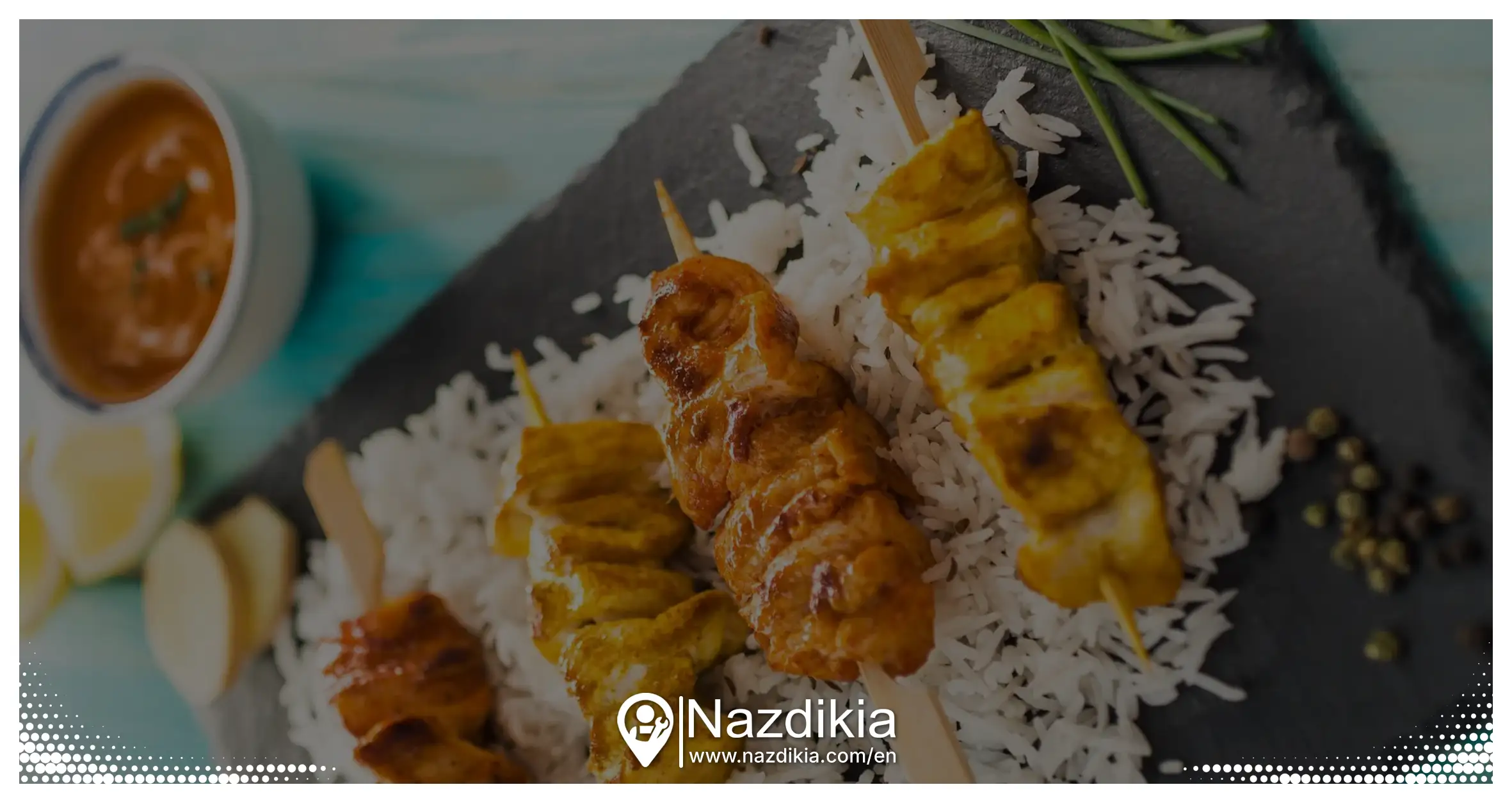
Jujeh kebab is the modest version of Chelo kebab. Jujeh kebab is easy to prepare, which makes it a better food for picnics compared to Chelo kebab. When friends or family want to gather outdoors in the country, jungle, or simply in a park, Jujeh is their go-to food. Also, Jujeh is the perfect food for Sizdah-be-Dar, which is a national holiday on the 13th and the last day of the Iranian New Year holidays.
Jujeh is made from a whole chicken cut down to small pieces, big enough to be placed on a metal stick to be held over fire. Chicken wings are extra popular, and the host usually buys more wings to prevent competition over who gets to enjoy them.
Before chicken pieces (Jujeh) are cooked, it is soaked for an hour or so in a mixture of chopped onions, some spices, a small portion of lime juice, and optionally some yogurt. Also, tiny portions of saffron mixed with water are added to the mixture to give it a golden color.
Like kebab, Jujeh can also be served with rice or bread. When faced with two choices of Jujeh and Kebab, some choose the former not just because it’s cheaper but because they think it’s a healthier and lighter meal compared to kebab. They also claim that when you’re eating Jujeh, “you know what you’re eating.”
Fourth Stop: Zereshk Polo
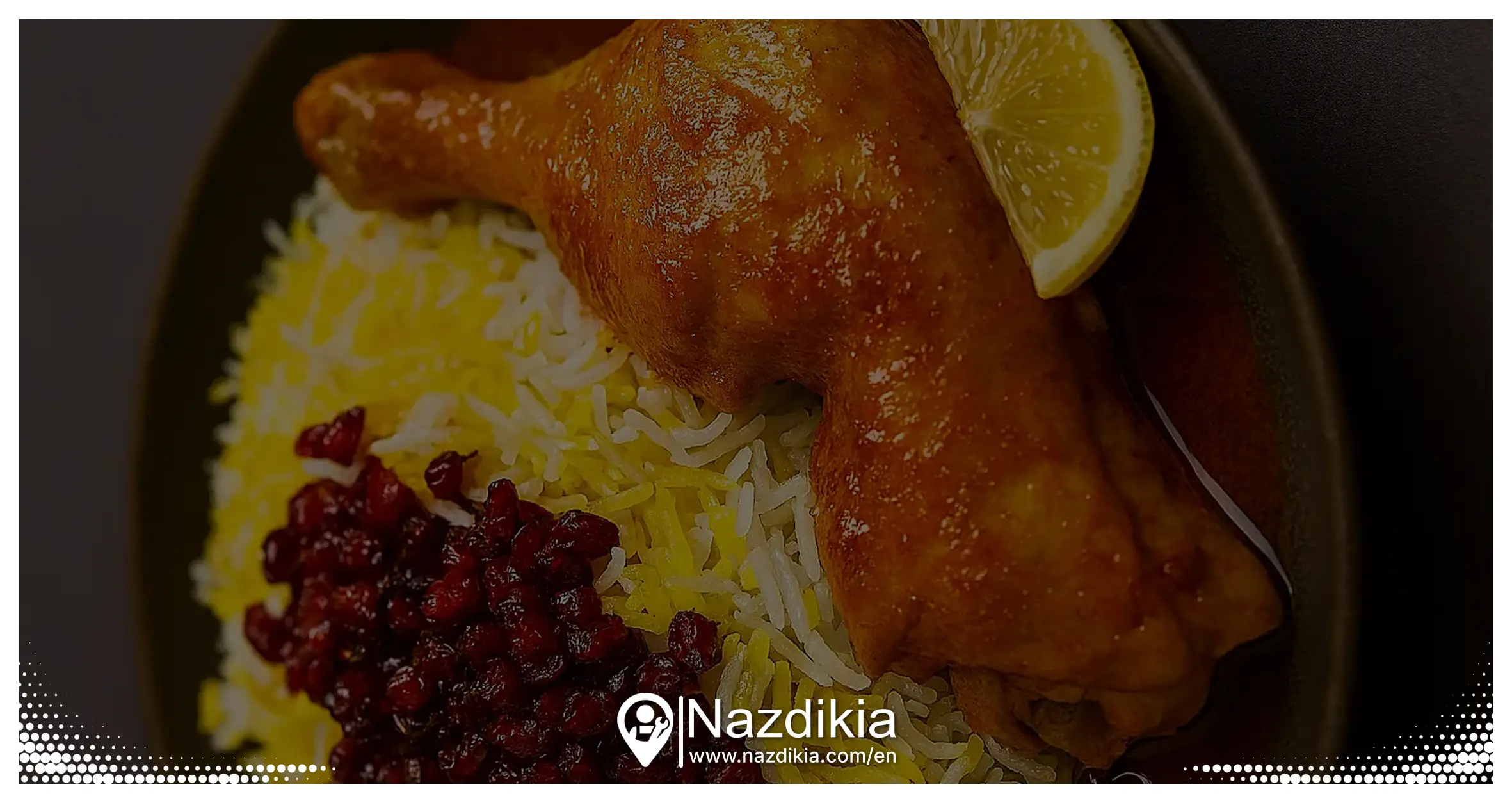
Zeresk Polo is another popular dish in Iranian food culture. The main ingredients are rice, barberries, and chicken. Barberries are rich in vitamin C, and chicken is a strong protein source. The barburreis give a unique taste to this food, which is somewhere between sweet and sour. It also offers a light orange color to the rice. Additionally, the use of tomato sauce makes the chicken juicy and tasty.
Zereshk Polo is usually served in two styles. In one, the rice with barberries and the chicken are cooked separately; in the other, they’re cooked together. The first style takes more effort, and it’s chosen for formal parties or when your guests are particularly important to you. The second style is more casual and is suitable for a casual family lunch or dinner. And, of course, the first one is more delicious.
Fifth Stop: Khoresh Gheymeh
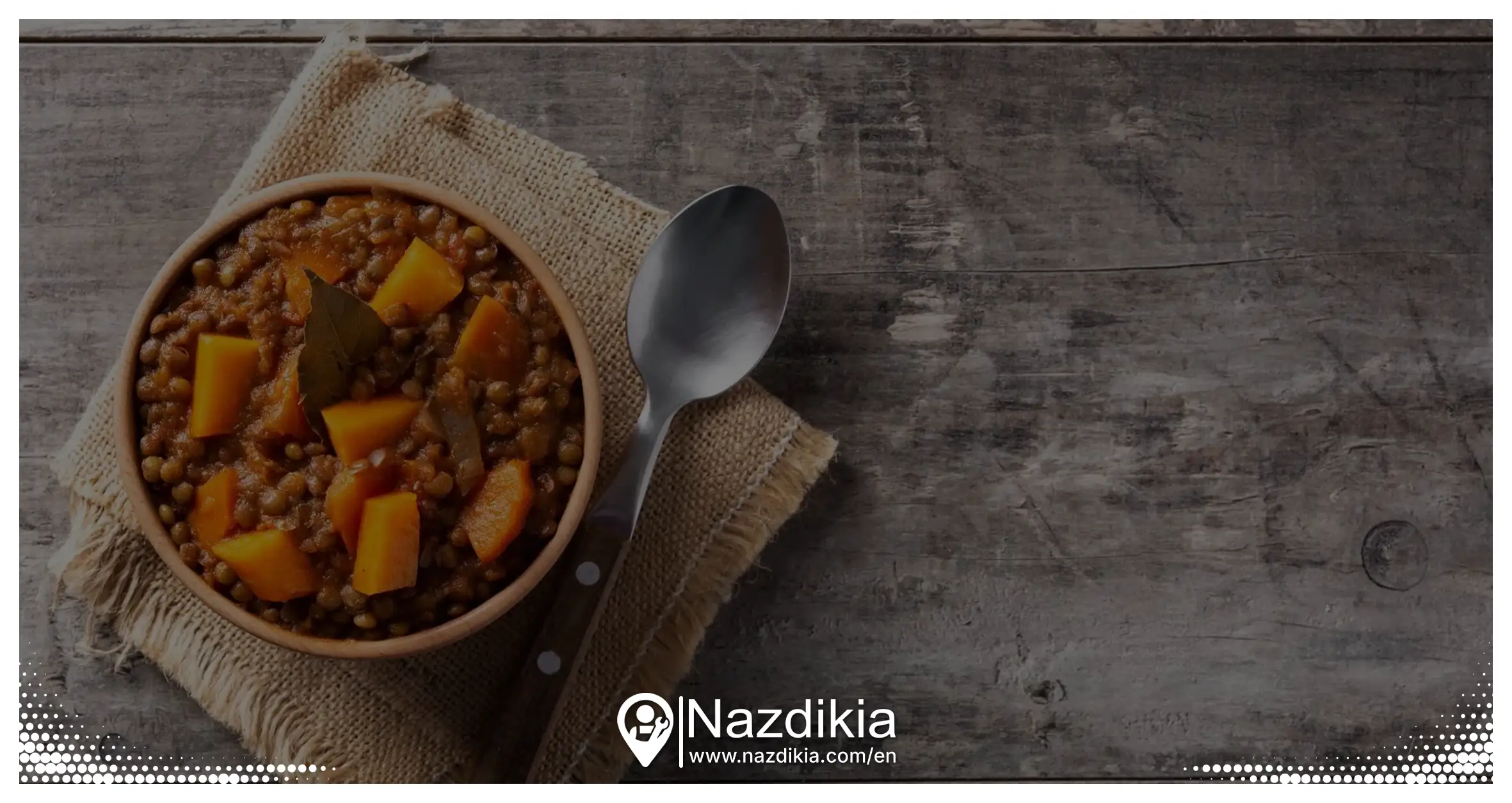
Halfway through our tour of 10 popular Persian dishes, we get to a dish that’s both casual and formal. It’s casual because you can easily make it at home, and it’s also formal because it’s a popular food to serve when there is a religious ceremony. For instance, on Tasooa and Ashoora days, which are two consecutive religious holidays in Iran, this dish is served in about 7 out of 10 mourning parties.
Khoresh Gheyme is a stew of split beans and pieces of lamb boiled in water and tomato sauce, and it’s served with rice. The secret ingredient that adds a dark color to the red stew and gives it a mild, bitter, sour taste is Omani lime or dried lime. Khoresht Heymeh is almost always served with rice, and it’s so delicious that you don’t need anything on the side.
Khoresh Gheyme has a more substantial presence in a typical weekly Persian food schedule because it isn’t an expensive stew, but it tastes great. If Ghormeh Sabzi has won the gold medal of Persian stews, it’s safe to say that the silver medal righteously belongs to Khoresht Gheymeh.
Sixth Stop: Sabzi Polo ba Mahi
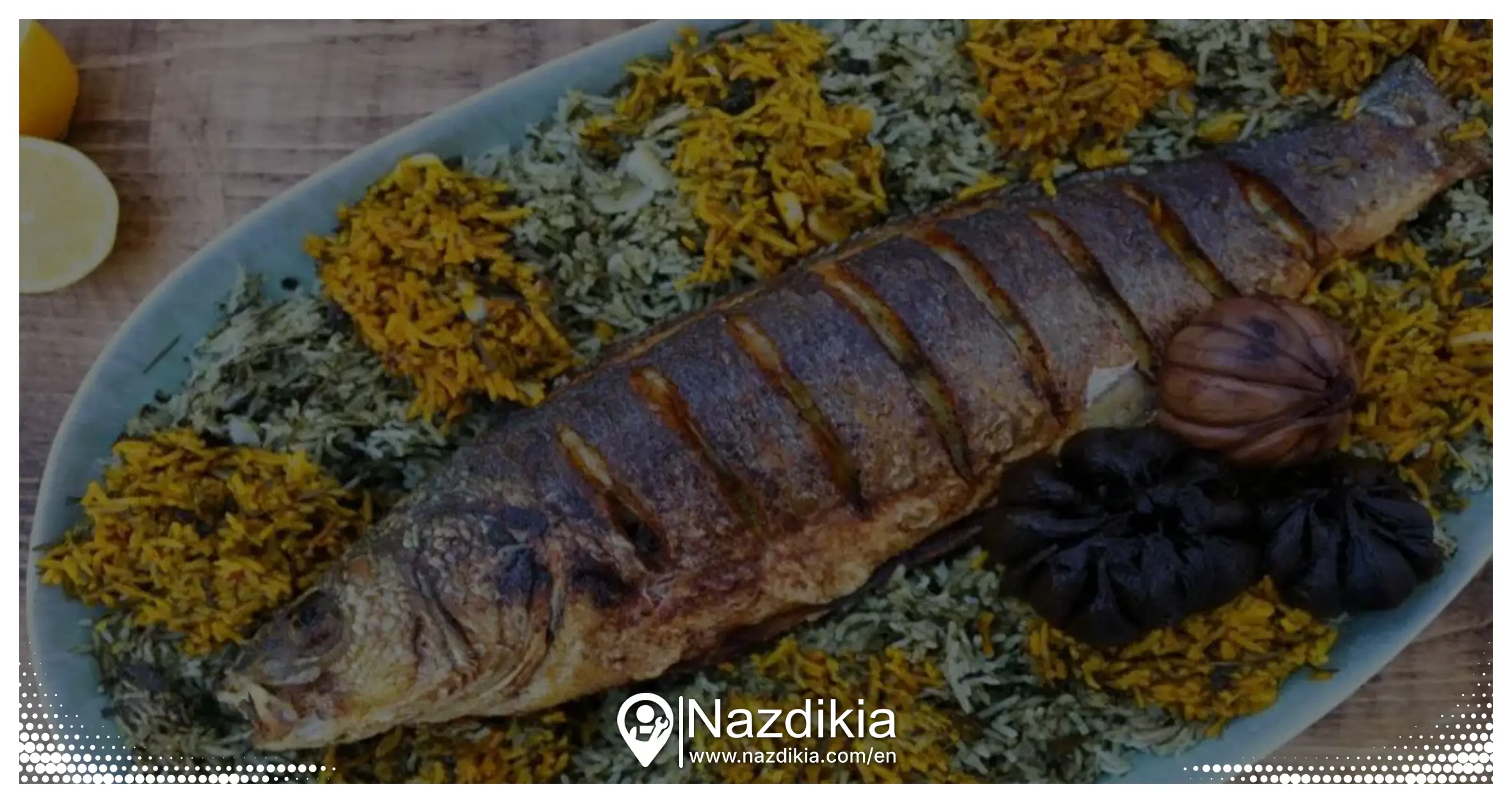
Sabzi Polo ba Mahi is an important festive dish that is served on the night of the Persian New Year called Nowruz. It’s also a typical dish to serve on Charshanbe Soori night, another national Persian holiday.
The staple ingredients of Sabzi Polo ba Mahi are rice, dried dill, and trout. You have a selection of the vibrant colors in your plate: green-white rice, roasted brown trout, and little piles of barberry orange rice. This food is usually served with yogurt or Shirazi salad on the side. Olive or pickled garlic also makes a memorable combination with this food.
Seneth Stop: Fesenjan
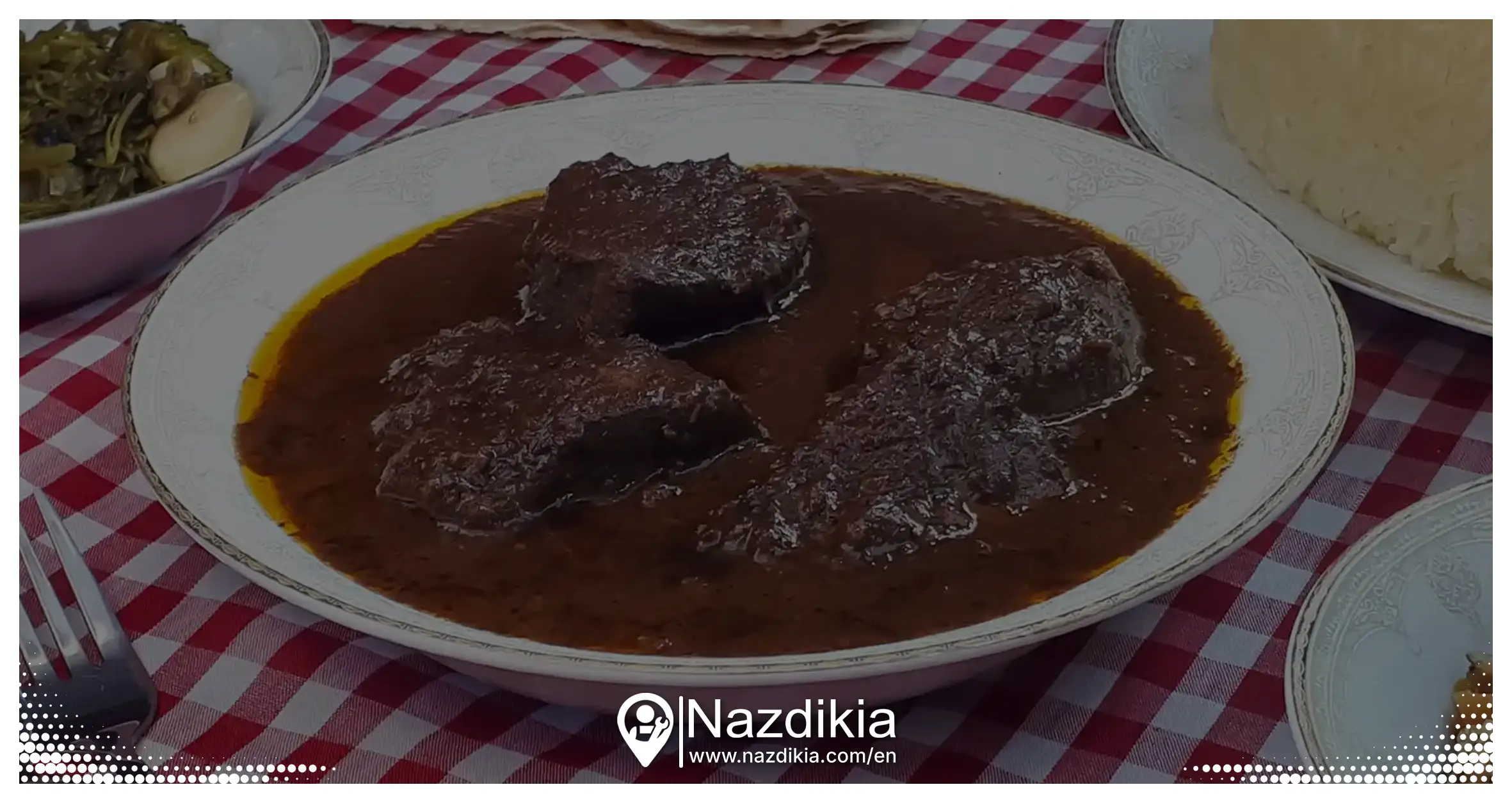
Fesenjan (commonly called Fesenjoon) is a Persian signature dish, but since it needs a lot of time and effort, Iranian families only eat this dish occasionally. Preparing Fesenjoon can take up to 6 hours, meaning that if you want to start serving it for dinner, you’ll have to get to work right after having lunch. But once it’s served and you see the satisfied faces of your guests, you’ll pat yourself on the shoulder and say it was worth it.
The main ingredients used in Fesenjoon are crushed walnuts, chicken breast or thigh, pomegranate molasses, sugar, saffron, and other common spices. This dish has either a sour or a sweet taste, depending on the recipe. That’s why those who don’t have a sweet taste and prefer a salty taste don’t like this food. Even if you’re one of these people, don’t say no to Fesenjoon; you’ll upset the host, and you’ll miss a tasty, nutritious meal.
Eighth Stop: Tah Chin
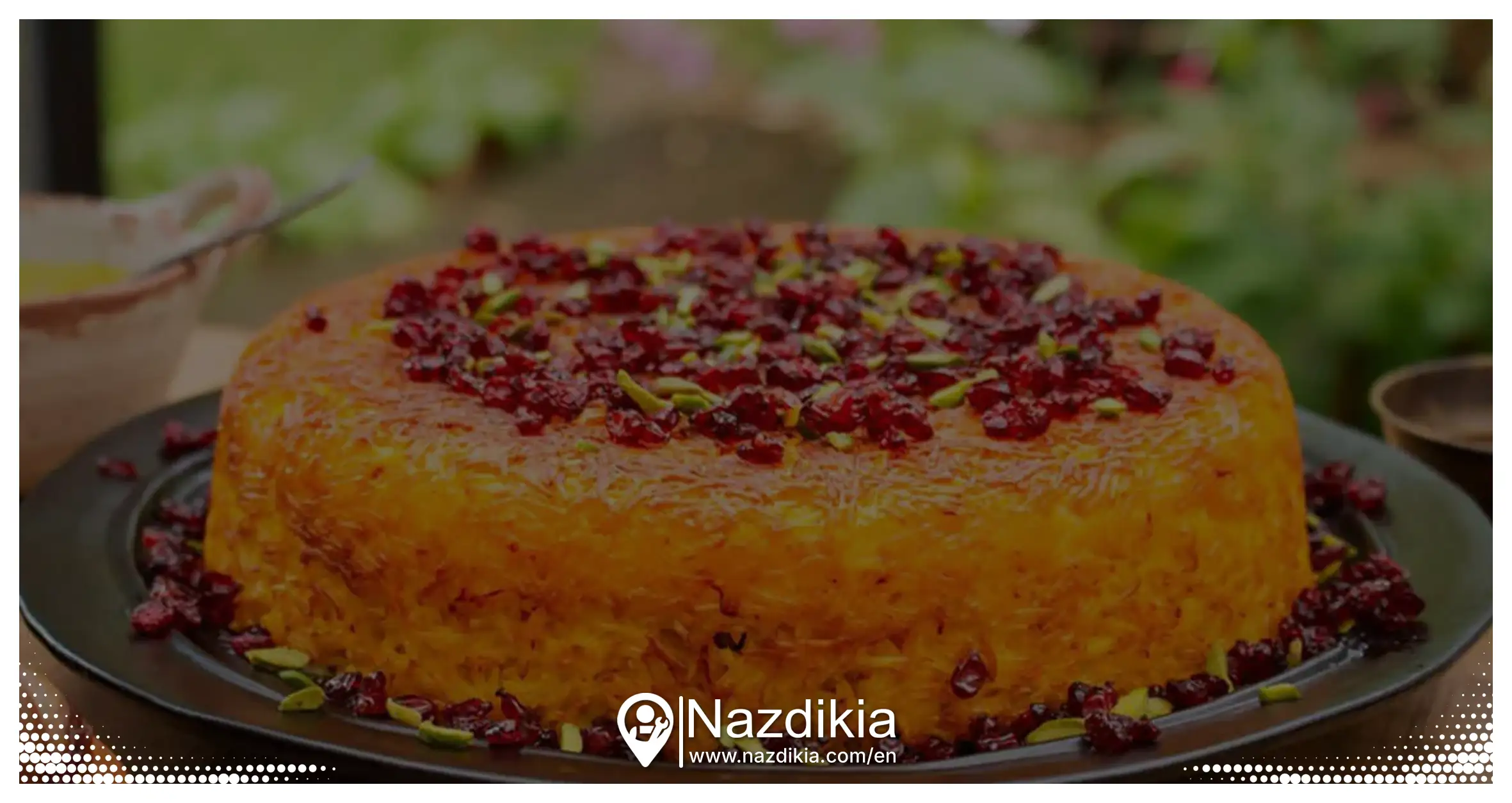
The name Tah Chin means placed at the bottom, and is suggestive of how the dish is cooked. The main ingredients (a mixture of rice, yogurt, and egg yolk) are laid at the bottom of the pot, and more rice and chicken breast are added on top. Then, when the food is ready, the cook inverts the pot onto a large serving plate, and thus the bottom layer gets on top.
Tah Chin has a golden color, but it’s a humble Persian you can have on any day. Tah Chin is a family dish, and it’s not common to serve it in large or formal dinner parties.
The staple ingredients in Tah Chin are rice, chicken breast, strained yogurt, eggs, butter, turmeric, and other peripheral ingredients. This dish includes both chicken and eggs. In a variant of Tah Chin, you can also use eggplants in the recipe.
Ninth Stop: Dizi
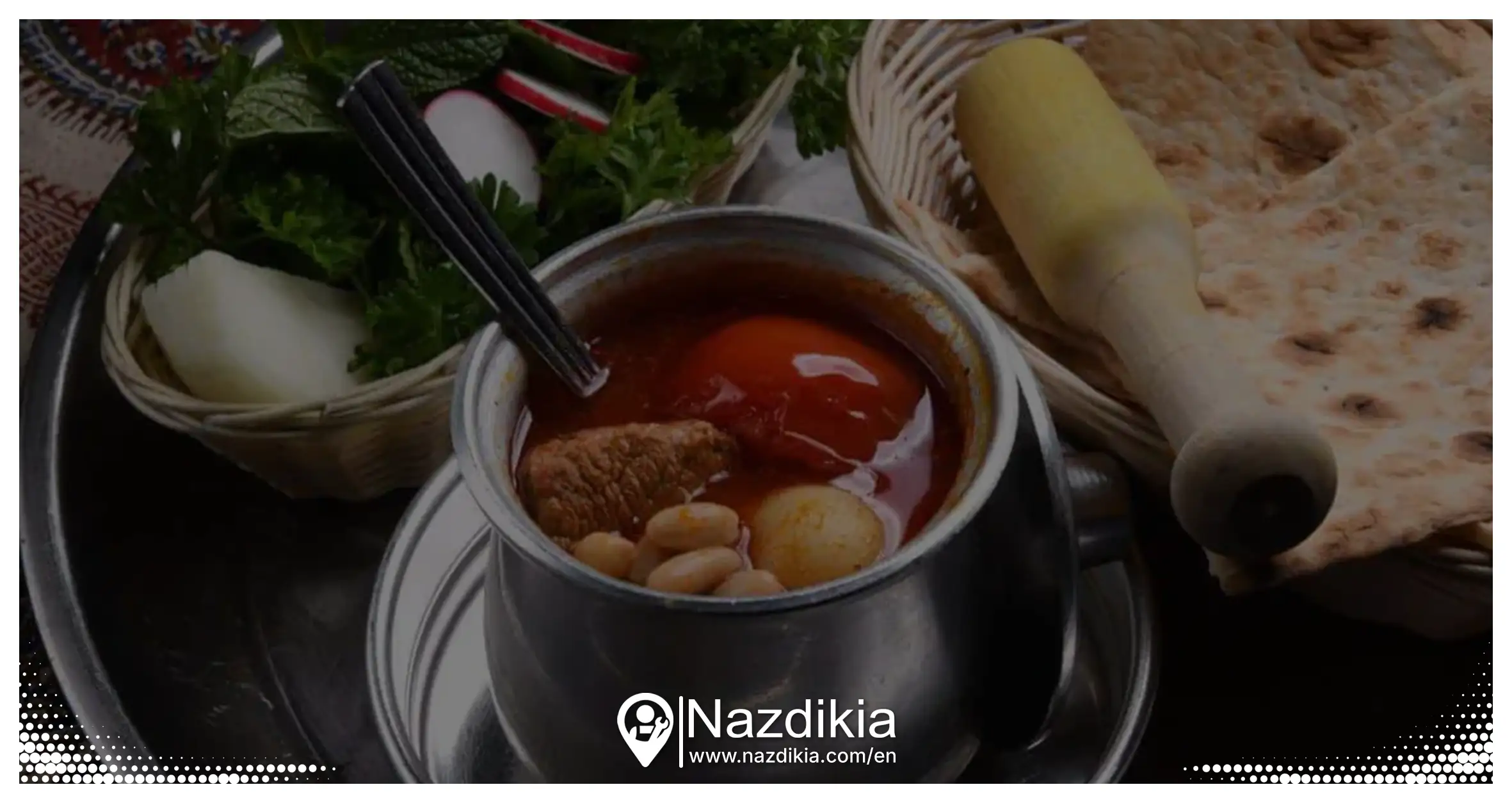
Dizi, also known as Ab Goosht, is a traditional Persian food, and it’s one of the famous Persian dishes that doesn’t include rice. Technically, Dizi is the name of the bowl that Ab Goosht is served in, but this name is commonly used to refer to the food.
Ab Goosht is made from boiling a preferred legume, such as beans, peas, or lentils, in a pot with a tight lid called Zood Paz (pressure cooker). Potatoes and some slices of lamb are other staples of this dish.
Tomato sauce is an optional ingredient to add to the mix. If you add tomato sauce, your Ab Goosht can also be called Dizi. Without that, you Ab Goosth takes on a pear green color. Ab Goosht is usually red when peas are the chosen legume, and when other legumes are used, tomato sauce isn’t added to the food.
The Last Stop: Kaleh Pache
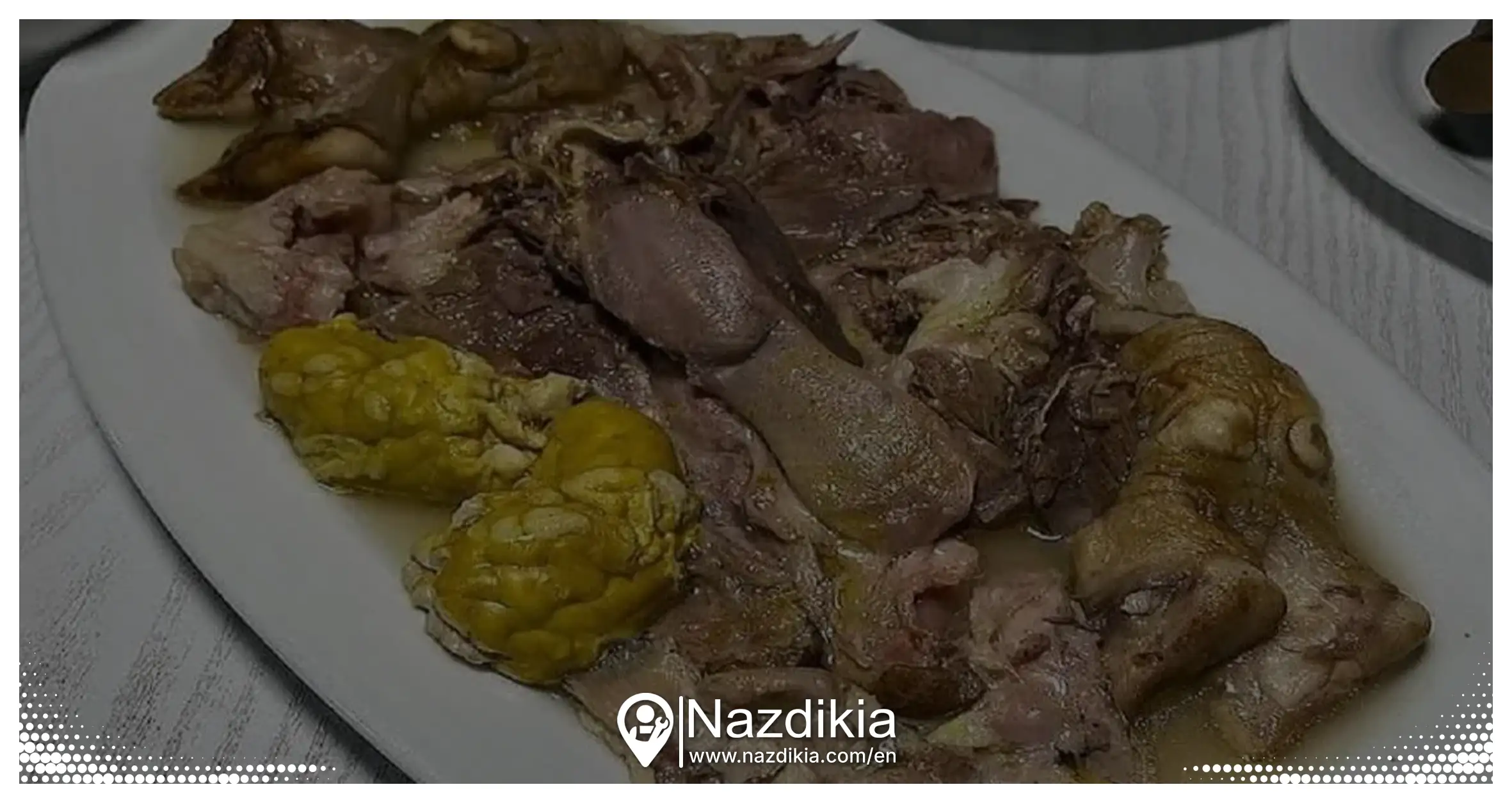
Kaleh Pacheh is a polarizing Iranian dish, meaning that some people love it and some hate it. This dish is usually served at dawn or early morning, and since its preparation doesn’t follow a home kitchen-friendly recipe, people go to a special restaurant called Kaleh Pazi.
The word “Kaleh” means “head” or “skull” in English, and here, it refers to the head of a sheep. Also, the word “Pache” refers to the lower part of a sheep’s legs.
This dish is considered a heavy meal and is very rich in nutrients, including vitamin A, B12, D, and minerals such as calcium, phosphorus, zinc, and iron. That’s the reason why some people love it.
On the other end of the continuum, the smell, the looks, and the fact that the inside of a sheep’s head, including the eyes and the brain, is floating in your bowl, is disgusting, and that’s why some people can’t stand this dish in the first place, let alone starting their day with it.
Medical advice:
Kaleh Pache is extremely fatty, and people with a medical history of high cholesterol and heart problems are advised against it. Healthy people can have Caleh Pache once or twice a month.
Where to Taste the Authentic Persian Cuisine
Persian cuisine has found its way throughout the world; whether you’re in North America or South Africa, you can find a Persian restaurant that gives you the chance to experience Persian cuisine. These cities in particular have the best Persian restaurants with high satisfaction rates. Nazdikia has handpicked the restaurants in major cities and states worldwide so that you can make a well-informed decision about where to eat Persian food in each city.
- Persian food in the US
Authentic Persian Restaurants in San Francisco
Authentic Persian Restaurants in Houston, Texas
Authentic Persian Restaurants in New York and New Jersey
Authentic Persian Restaurants in Los Angeles
Authentic Persian Restaurants in Washington
Authentic Persian Restaurants in Chicago
- Persian food in Canada
Authentic Persian Restaurants in Toronto
Authentic Persian Restaurants in Vancouver
- Persian food in Europe
Authentic Persian Restaurants in London
Authentic Persian Restaurants in Hamburg
Authentic Persian Restaurants in Paris
- Persian food in the Middle East & Oceania